
Navigating the faculty job market can feel like a daunting task, especially when it comes to mastering the art of follow-up emails. You’ve sent out your initial application with fingers crossed, but what next?
How do you keep your name at the forefront of a hiring committee’s mind without coming across as pushy or desperate? The answer lies in crafting a compelling follow-up email. This small but powerful tool can significantly boost your chances of standing out in a crowded field.
You’ll discover proven strategies that will help you write follow-up emails that resonate with hiring committees, making you the memorable candidate they want to consider. Keep reading to unlock the secrets of effective communication that can open doors to your dream faculty position.
Crafting The Perfect Subject Line
Crafting the perfect subject line for follow-up emails boosts your chances on the faculty job market. Use clear and concise language to grab attention and convey your message effectively. Keep it simple, yet impactful, ensuring it resonates with the recipient and prompts a response.
Crafting the Perfect Subject Line When you’re on the faculty job market, sending follow-up emails can be a game-changer. Your subject line is the first impression. It can determine whether your email gets opened or ignored. Crafting an engaging subject line can make all the difference.Stand Out In The Inbox
Your email will compete with hundreds of others. Make yours stand out. Use clear and compelling language. Avoid generic phrases like “Follow-up” or “Checking In.” Think about what makes your email unique.Keep It Short And Sweet
Long subject lines get cut off. Aim for a concise message. Keep it under 50 characters. A short subject line is easy to read and understand. It tells the recipient what to expect without overwhelming them.Be Specific
Tell them why you’re writing. Mention your interview or presentation. Your subject line should give a glimpse of the content inside. Specificity shows attention to detail and respect for their time.Use Actionable Language
Encourage them to open your email. Use action words. Words like “Review,” “Discuss,” or “Update” can be effective. They imply there’s something important inside. It creates a sense of urgency and interest.Personalize When Possible
If you know the recipient’s name, use it. A personal touch can make your email feel relevant. Mention a shared experience or mutual connection. It shows you’ve done your homework.Ask A Question
Questions pique curiosity. Ask something that begs an answer. It engages the reader’s mind. A question can be a powerful tool in your subject line. Crafting the perfect subject line is an art. How will you make yours stand out in the crowded inbox?Timing Your Follow-up
Timing your follow-up email is crucial in the faculty job market. Sending it too soon might seem pushy, while waiting too long can make you appear uninterested. The right timing shows enthusiasm and respect for the hiring process. It can also keep your application fresh in the committee’s mind. This section will guide you on how to time your follow-up effectively.
Understanding The Hiring Timeline
Familiarize yourself with the typical hiring timeline for faculty positions. Most academic positions have set schedules for reviewing applications and conducting interviews. Knowing these can help you plan your follow-up. Check the job posting for any deadlines or timelines.
The Ideal Waiting Period
Wait at least one to two weeks after applying before following up. This gives the hiring committee time to review applications. It also shows you respect their process. Waiting too long, though, can make your application seem forgotten.
Consider The Academic Calendar
Academia follows a unique calendar with busy and slow periods. Avoid sending follow-ups during exam weeks or holiday breaks. These times can delay responses and lessen the impact of your email. Choose a time when faculty are more likely to be available.
When To Follow Up Post-interview
After an interview, send a thank-you email within 24 to 48 hours. If you haven’t heard back after two weeks, consider sending a polite follow-up. This shows your continued interest in the position.
Adjusting For Online Applications
Online application systems may provide status updates. Check these before sending a follow-up. If your status hasn’t changed after two weeks, it may be time to follow up. This can ensure your application hasn’t been overlooked.
Personalizing Your Message
Crafting personalized follow-up emails for faculty job applications enhances your connection with potential employers. Highlight relevant skills and express genuine interest in their institution. Keep it concise and professional to stand out in the competitive academic job market.
Personalizing your follow-up email can make all the difference when you’re on the faculty job market. It’s about connecting with the person on the other end, showing genuine interest, and standing out in a sea of applicants. Personalization helps you establish rapport and leaves a memorable impression, making your application more likely to succeed.Understand Your Recipient
Knowing who you’re emailing is crucial. Research their interests, recent work, or projects they have led. This knowledge allows you to tailor your message to align with their expertise. Mention something specific that relates to their work to catch their attention.Connect On A Personal Level
Share a brief story or experience that resonates with the recipient’s field. A personal touch shows that you’re genuinely interested in them and not just looking for a job. It can be as simple as mentioning how their research inspired your own academic journey.Highlight Shared Interests
Point out any common interests or connections you may have. Did you attend the same conference or workshop? Have you both published in similar journals? Highlighting these links can foster a sense of camaraderie and make your email more relatable.Use Their Name
Addressing someone by their name is a fundamental yet powerful personalization technique. It shows respect and attention to detail. Avoid generic greetings like “Dear Hiring Manager” and instead use “Professor [Last Name]” or “Dr. [Last Name]”.Keep It Relevant And Brief
Personalization should be concise. Avoid overwhelming the reader with too much information. Focus on one or two key personalized elements that truly matter. Make your message clear and relevant to the position you’re applying for.Ask Thoughtful Questions
Pose a question related to their research or the department’s direction. Thoughtful questions can spark interest and lead to engaging conversations. It shows you’re proactive and willing to learn, which are attractive qualities in a candidate. Taking the time to personalize your email can create a lasting impression. What unique aspect of your background can you connect to the recipient’s work? Consider how this might enhance your candidacy and make your application unforgettable.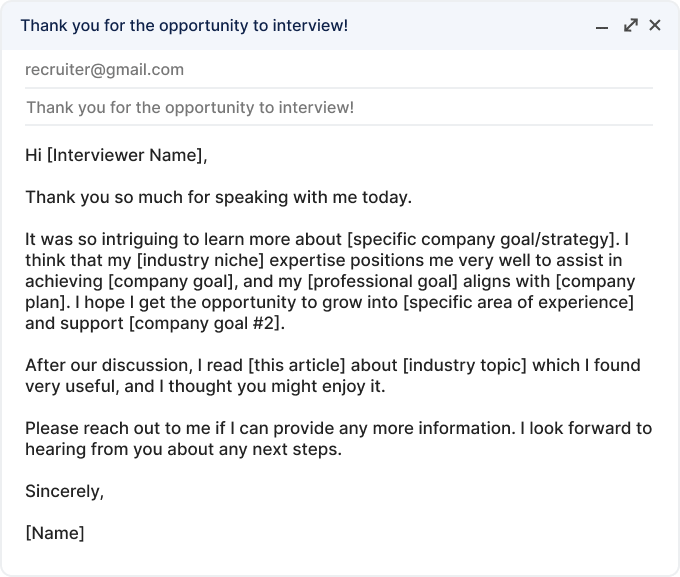
Credit: resumegenius.com
Highlighting Your Achievements
Crafting a follow-up email is crucial in the faculty job market. Highlight achievements concisely to grab attention. Use clear language to showcase your expertise and remind the hiring committee of your value.
When you’re on the faculty job market, sending follow-up emails is crucial. They keep you fresh in the minds of hiring committees and offer a chance to highlight your achievements. By strategically showcasing your accomplishments, you can make a lasting impression. But how do you effectively spotlight these achievements without sounding boastful or repetitive? Let’s explore some practical ways to present your achievements compellingly. ###Identify Key Achievements
Start by making a list of your most significant achievements. Focus on those that align with the job you’re applying for. If you’ve published research, led projects, or received awards, these are worth mentioning. Think about what makes you stand out. What have you done that others in your field may not have? Use this as your framework. ###Quantify Your Success
Numbers tell a compelling story. Instead of saying you published research, specify how many papers you published or the impact factor of the journals. Did you increase student engagement in your classes? Mention the percentage of improvement. Quantifying your achievements gives them weight and credibility. ###Connect Achievements To The Role
Tailor your achievements to the job description. If a position emphasizes teaching, highlight your innovative teaching methods or curriculum development. For research-centric roles, focus on your research outcomes and how they align with the department’s goals. This shows you’ve done your homework and are genuinely interested in the position. ###Keep It Concise
While you want to be thorough, brevity is key. Hiring committees are busy, and long emails may be overlooked. Aim for a couple of sentences per achievement. This keeps your email focused and respectful of their time. ###Use A Friendly Tone
Maintain a professional yet approachable tone. You want to come across as confident, not arrogant. Reflect on a past experience where a friendly tone helped you connect better with someone. Aim to replicate that tone in your email. ###End With A Call To Action
Wrap up your email by expressing your enthusiasm for the role. Invite the committee to contact you for more information or further discussion. This not only shows initiative but also keeps the lines of communication open. What action would you like the reader to take next? By highlighting your achievements effectively, you can leave a memorable impression. What strategies have you found successful in showcasing your accomplishments?Expressing Continued Interest
Expressing continued interest in a faculty job is crucial. It shows your enthusiasm and dedication to the role. When you send a follow-up email, convey this sentiment clearly. This keeps you on the hiring committee’s radar. It also demonstrates your commitment to the position. Your message should be concise, genuine, and thoughtful. Make sure your interest aligns with the institution’s goals and values. Below, we explore how to express continued interest effectively.
Reiterate Your Enthusiasm For The Position
Start by reaffirming your excitement about the role. Highlight specific aspects that attract you. This could be the department’s research focus or teaching philosophy. Mention how these align with your career goals. Your excitement should be palpable. This reinforces your genuine interest in the position.
Highlight Relevant Achievements
Update the committee on any new accomplishments. Share recent publications or projects. These should relate to the job description. This shows your ongoing commitment to your field. It also underscores your ability to contribute to the department. Keep this section brief but impactful.
Emphasize Your Fit With The Institution
Discuss how your values match the institution’s culture. Mention any connections you made during the interview. Reflect on conversations with faculty members. This shows you understand the institution’s mission. And how you can contribute to it.
Ask Thoughtful Questions
Pose questions that show your deep interest. These should be insightful and specific. Avoid generic questions. Focus on department goals or future plans. This demonstrates your curiosity and engagement. It also keeps the dialogue open.
Demonstrating Value To The Department
Demonstrating value to the department is crucial when you’re on the faculty job market. Your goal is to show how your unique skills and experiences can benefit the department in meaningful ways. A well-crafted follow-up email can highlight your potential contributions and align them with the department’s needs.
Highlight Your Research Contributions
Bring attention to your research achievements. Share how your work complements the department’s existing strengths or fills a gap. A friend once mentioned that showcasing her niche research led to her being seen as an asset rather than just another candidate.
Offer specific examples of how your research aligns with ongoing projects. This approach shows you’re already thinking about collaboration. Have you considered how your research could enhance the department’s reputation?
Showcase Teaching Excellence
Teaching is a core responsibility, so emphasize your successes in this area. Discuss innovative methods you’ve used to engage students or improve learning outcomes. Are there particular techniques or technologies you’ve found effective?
Consider sharing feedback from students or colleagues. A simple quote can convey your dedication and impact. Have you developed any new curricula that could benefit their program?
Illustrate Service And Community Engagement
Departments value faculty who contribute beyond teaching and research. Highlight your involvement in committees, professional organizations, or community service. How have these experiences prepared you to contribute to their department?
Think about any initiatives you’ve led. These examples demonstrate leadership and commitment. What unique perspective do you bring to community engagement?
Propose Future Collaborations
Suggest ways you could collaborate with existing faculty or departments. This shows foresight and willingness to integrate. Have you identified potential interdisciplinary projects that could be mutually beneficial?
Consider mentioning specific faculty members or research groups. This personal touch can make a powerful connection. What fresh ideas can you bring to the table?
Conclude With Confidence
Wrap up your email with a confident yet humble statement. Reinforce your enthusiasm for the position and the department. How do you envision contributing to their future success?
Invite further discussion or questions. This keeps the conversation open and demonstrates your engagement. Are you ready to take the next step in building a brighter future together?
Navigating Multiple Follow-ups
Following up on faculty job applications requires a thoughtful approach. Keep emails concise, polite, and to the point. Express gratitude for their time and reiterate your interest in the position.
Navigating the faculty job market can be a whirlwind, especially when it comes to sending follow-up emails. You might find yourself juggling multiple applications and awaiting responses from various institutions. Crafting the right follow-up emails is crucial to keeping your application on top of the pile. It’s not just about reminding them of your interest—it’s about demonstrating your proactive approach and enthusiasm for the role. How do you ensure each follow-up remains relevant and doesn’t come across as repetitive or intrusive?Understanding The Timing
Timing is everything when sending follow-up emails. You want to be assertive but not impatient. It’s generally advised to wait about a week after your initial application before sending your first follow-up. If you haven’t heard back after the interview, a follow-up a week later can show you’re still interested.Crafting Unique Messages
Avoid sending the same generic email to each institution. Tailor your message to reflect your interest in their specific program or department. Mention any recent developments or news about the institution to show you’ve done your homework. Personalize each email by mentioning the names of faculty members or research areas you’re excited about.Managing Different Responses
Not all responses will be positive, and some might require further action. Be prepared for a range of replies, from enthusiastic to non-committal. If you receive a positive response, acknowledge it promptly and express your eagerness to proceed to the next steps. For non-committal replies, ask if there’s any additional information you can provide to support your application.Keeping Track Of Your Follow-ups
With multiple applications, it’s crucial to keep track of your communications. Use a simple spreadsheet or a dedicated app to log your emails and responses. Make a note of the dates you sent your follow-ups and any responses received. This organization helps ensure you don’t send redundant emails and allows for quick reference during interviews.Reflecting On Your Strategy
After sending multiple follow-ups, take time to reflect on your approach. Are you receiving more positive responses? If not, consider tweaking your strategy based on the feedback you’ve gathered. Your follow-up strategy should evolve with each application cycle, incorporating lessons learned from past experiences. — Navigating multiple follow-ups requires a balance of persistence and patience. Are you ready to refine your approach and make an impactful impression on your potential future colleagues?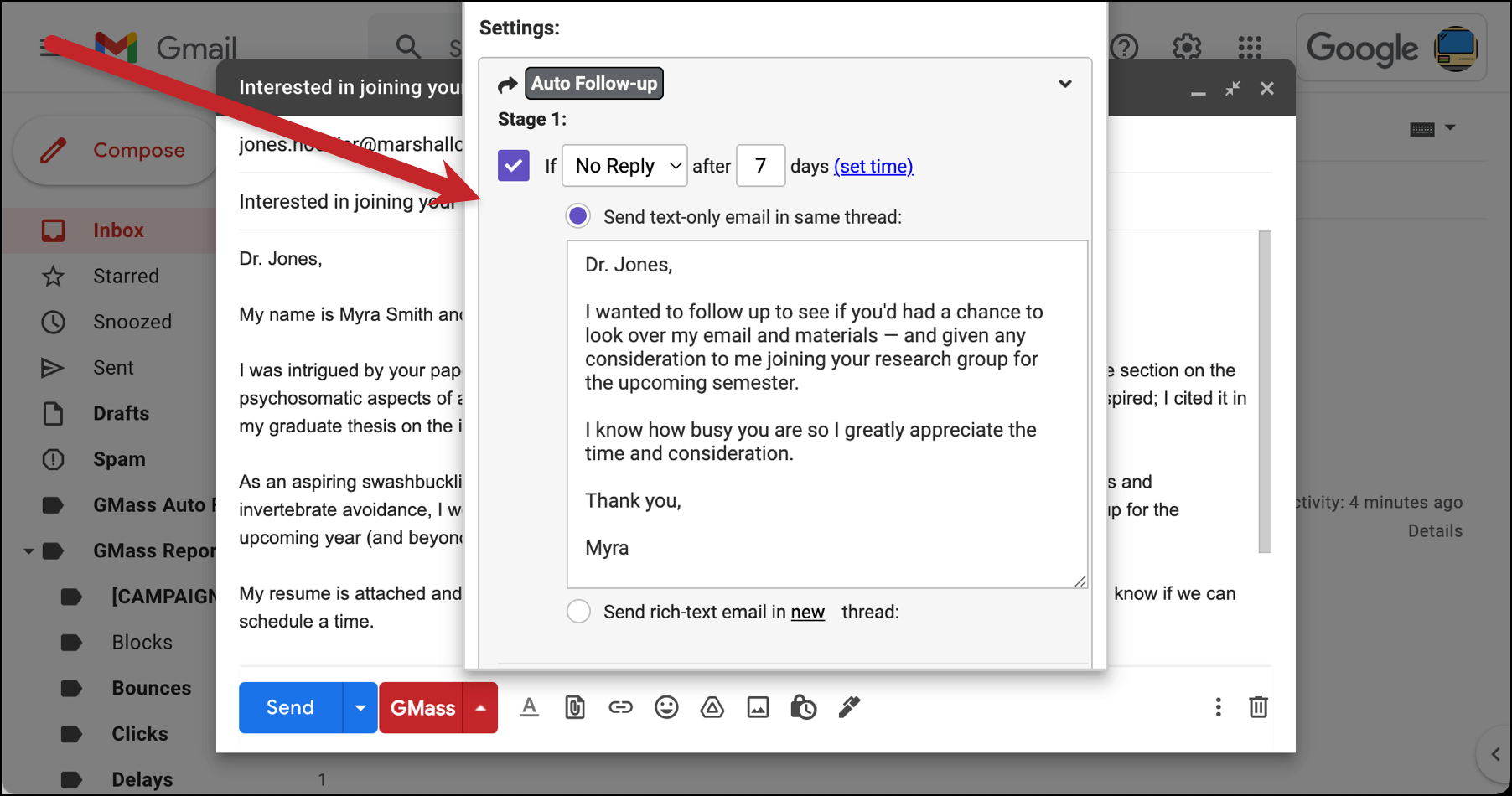
Credit: www.gmass.co
Avoiding Common Pitfalls
Crafting a follow-up email on the faculty job market requires careful timing and clarity. Highlight your enthusiasm for the position and reference specific points from previous conversations or interviews. Keep your message concise, respectful, and free of errors to maintain professionalism.
Navigating the faculty job market can feel like a daunting journey, especially when you’re trying to stand out among a sea of candidates. One crucial aspect of the job hunt is sending follow-up emails. While these emails can bolster your chances, falling into common pitfalls can easily undermine your efforts. Let’s explore how you can avoid these missteps and ensure your follow-up emails make a positive impact.1. Don’t Overwhelm The Recipient
Sending too many emails can quickly backfire. Imagine being on the receiving end of daily messages—overwhelming, right? Limit your follow-ups to one or two after each interaction, giving the recipient space to respond.2. Avoid Generic Language
Generic emails often get ignored. Craft your message with specific details related to your interview or application. Mention something unique from your conversation that highlights your interest and attention to detail.3. Steer Clear Of Demanding Language
Coming across as demanding can deter potential employers. Instead of asking, “When will I hear back?” try, “I’m eager to learn about any next steps at your convenience.” A polite tone shows respect and patience.4. Don’t Forget To Proofread
Errors in your email can leave a poor impression. Double-check for typos and grammatical mistakes. Reading your email aloud can help catch errors that might slip through a quick scan.5. Avoid Being Vague About Your Intentions
Be clear about why you’re following up. Instead of simply saying “I’m following up,” specify what you hope to achieve, like confirming receipt of your application or expressing continued interest in the position.6. Resist The Urge To Rehash Your Entire Resume
Your follow-up isn’t a recap of your qualifications. Focus on one or two key points that underscore your fit for the role. This keeps your email concise and impactful.7. Refrain From Sending At Inappropriate Times
Timing matters in email communication. Avoid sending follow-ups late at night or during weekends. Aim for mid-morning on weekdays when your email is more likely to be seen and appreciated. Remember, your goal is to remind the faculty of your candidacy without overstepping boundaries. Have you ever received a follow-up email that made you cringe? Share your thoughts on what makes a follow-up email effective—or ineffective.Sample Follow-up Templates
Following up on a faculty job application can be daunting. You want to show interest, but not seem pushy. Using templates can simplify the process. They provide a clear structure for your email. Customize them to fit your voice. This ensures your message is professional and sincere.
Template 1: Post-interview Follow-up
Thank you for the interview on [Date]. I enjoyed our conversation about [Specific Topic]. It deepened my interest in the [Position Title]. I am excited about the opportunity to contribute to [Institution Name].
If you need more information, feel free to ask. Looking forward to the possibility of working together.
Template 2: Check-in After Application Submission
I hope this message finds you well. I submitted my application for the [Position Title] on [Date]. I am keen to learn more about the next steps in the process.
Thank you for considering my application. I am eager to join [Institution Name] and contribute to its mission.
Template 3: Follow-up After No Response
I hope you are doing well. I am writing to follow up on my application submitted on [Date]. I am enthusiastic about the role and eager to hear back.
If there have been any updates, please let me know. Thank you for your time and consideration.
These templates provide a solid foundation. Adjust them to fit your situation. Each message should reflect your personality and professionalism.

Credit: theprofessorisin.com
Frequently Asked Questions
What Is A Follow-up Email For Faculty Jobs?
A follow-up email is sent after an interview or application. It demonstrates continued interest and professionalism. This email can remind the hiring committee of your application. It also offers a chance to address any overlooked points. Sending a well-crafted follow-up can enhance your candidacy.
When Should You Send A Follow-up Email?
Send a follow-up email one to two weeks after applying. If following an interview, send it within 24-48 hours. This shows enthusiasm and keeps you fresh in the committee’s mind. Timing is crucial; too soon may seem impatient, too late may seem disinterested.
How Do You Structure A Follow-up Email?
Start with a polite greeting and express gratitude. Mention the specific position and your continued interest. Briefly reiterate your qualifications and how they align with the role. End with a professional closing and contact information. Keep the email concise and respectful.
What To Include In A Follow-up Email?
Include a polite greeting and gratitude for the opportunity. Briefly mention your qualifications and enthusiasm. If applicable, address any interview points that needed clarification. Include your contact information and a professional closing. Keep it concise and focused on strengthening your application.
Conclusion
Crafting a follow-up email is crucial in the faculty job market. It shows your interest and professionalism. Keep your message short and clear. Mention specific details from your interview. Personalize each email to the recipient. This makes a strong impression.
Remember to be polite and express gratitude. Timing is important; wait a few days after the interview. Avoid being pushy or impatient. A well-written email can set you apart. It keeps you fresh in their minds. With these tips, you can confidently send your follow-up emails.